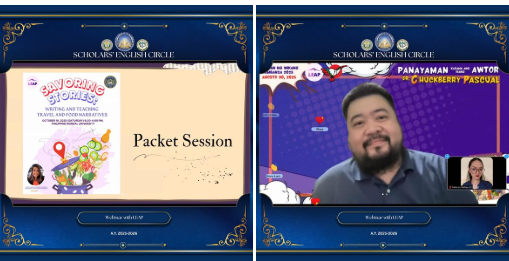
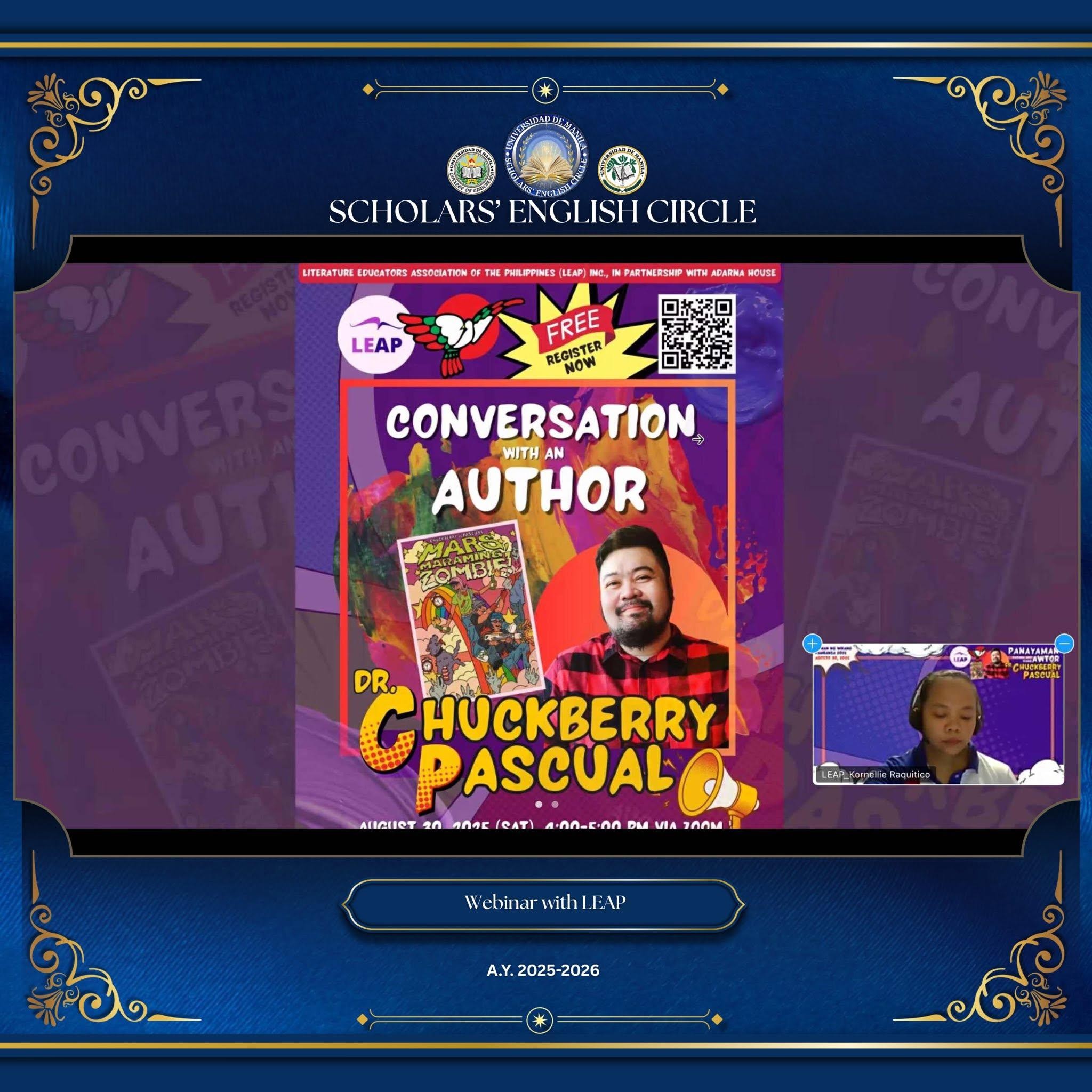
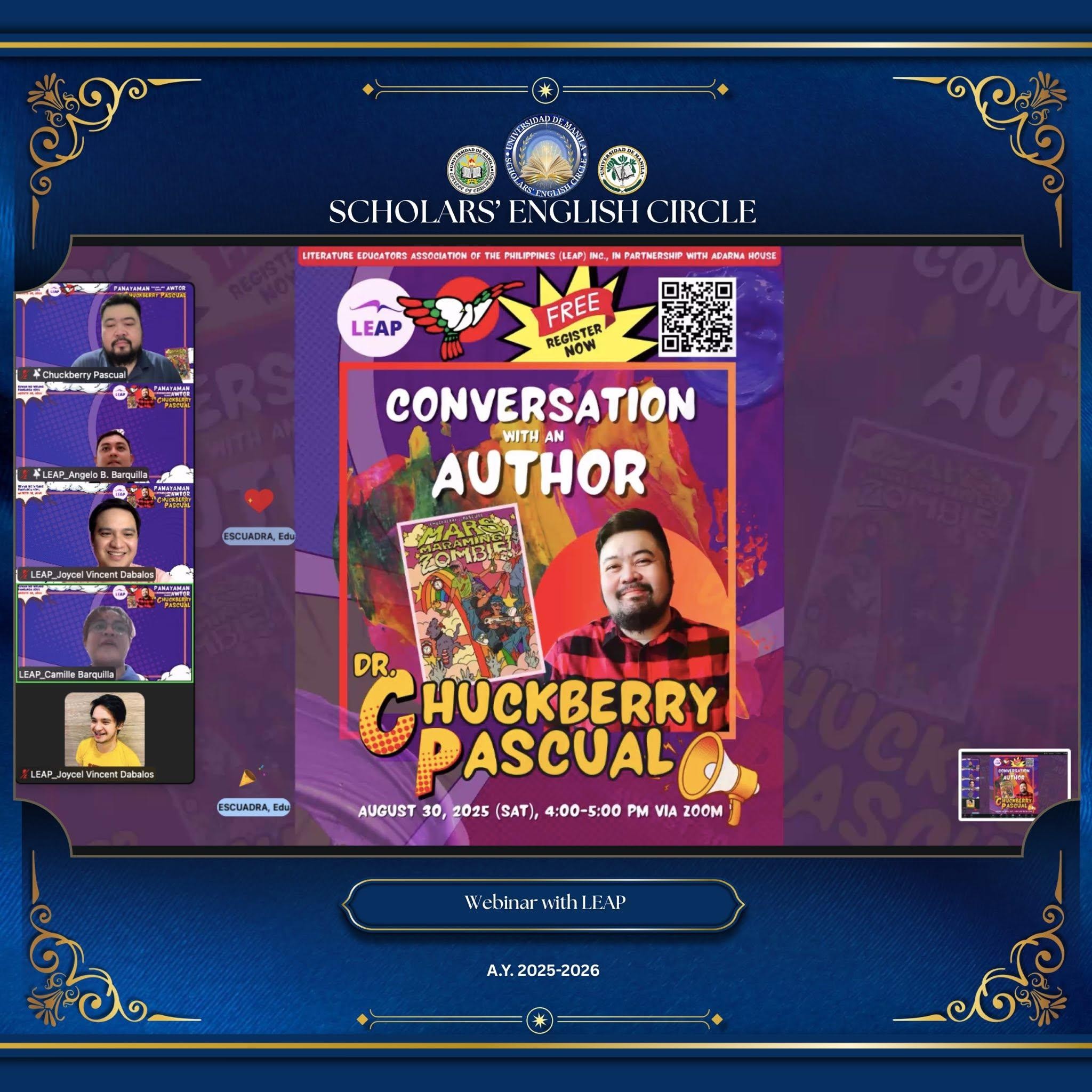
UDM English majors and faculty engage in a literary conversation highlighting the enduring importance of reading, storytelling, and cultural preservation.
MANILA, Philippines — In an increasingly digital world, where information moves faster than ever, literature remains a powerful bridge connecting generations, preserving cultural identity, and inspiring meaningful conversations about society.
Recognizing this enduring value, English major students and faculty members of the Universidad de Manila (UDM) engaged in a literary webinar organized by the Literature Education Association of the Philippines (LEAP), featuring acclaimed novelist, short story writer, and translator Dr. Chuckberry J. Pascual.
The activity provided an opportunity for aspiring educators and literature enthusiasts to explore the transformative role of literary works in education, cultural preservation, and personal development.
Rediscovering the Power of Literature
During the webinar, Dr. Pascual emphasized the importance of literature as a means of preserving culture, identity, and collective memory, particularly in the digital age.
Known for his literary works Mars, May Zombie! (2022) and Mars, Maraming Zombie! (2025), Dr. Pascual shared perspectives on the continuing relevance of storytelling and literary engagement.
The discussion highlighted how literature reflects the experiences, values, beliefs, and traditions of communities, making it an essential instrument for understanding society and sustaining cultural heritage.
For participating UDM English majors, the activity reinforced the importance of developing an appreciation for literature not only as an academic discipline but also as a meaningful expression of human experience.
Empowering Future Educators as Advocates of Reading
A central message of the webinar was the responsibility of educators and communities to cultivate a culture of reading among young people.
As digital technologies continue to influence how individuals access information and engage with written materials, educators play an increasingly important role in encouraging meaningful literary experiences.
The webinar emphasized that literature remains relevant when teachers, students, and communities actively promote reading, storytelling, and literary appreciation.
For future English educators, this message underscores the importance of becoming advocates of literacy and cultural preservation.
By nurturing students’ interest in literary works, educators can contribute to developing critical thinking, creativity, empathy, and a deeper understanding of diverse perspectives.
Strengthening Academic Engagement Through Partnerships
UDM’s participation in the LEAP webinar demonstrated the value of professional and academic engagement in enriching students’ learning experiences.
Through opportunities to learn from established writers and literary practitioners, students can encounter perspectives that complement classroom discussions and broaden their understanding of contemporary literature.
Such engagements also encourage future educators to connect literary studies with real-world concerns, including cultural identity, digital transformation, and lifelong learning.
Advancing Quality Education and Cultural Sustainability
The activity supports the broader objectives of SDG 4 (Quality Education), particularly the promotion of inclusive learning and lifelong educational opportunities.
It also relates to SDG 11 (Sustainable Cities and Communities) through its emphasis on cultural heritage, and SDG 17 (Partnerships for the Goals) through engagement with a professional literary organization.
The webinar reinforces the idea that sustainable development also involves protecting cultural knowledge, promoting literacy, and ensuring that stories and traditions remain meaningful to future generations.
As UDM continues to encourage academic participation in literary and cultural initiatives, it strengthens its commitment to developing educators who recognize the power of literature in shaping informed, culturally aware, and socially responsible citizens.
At Universidad de Manila, stories are more than words on a page—they are living connections to culture, identity, and the generations yet to come.