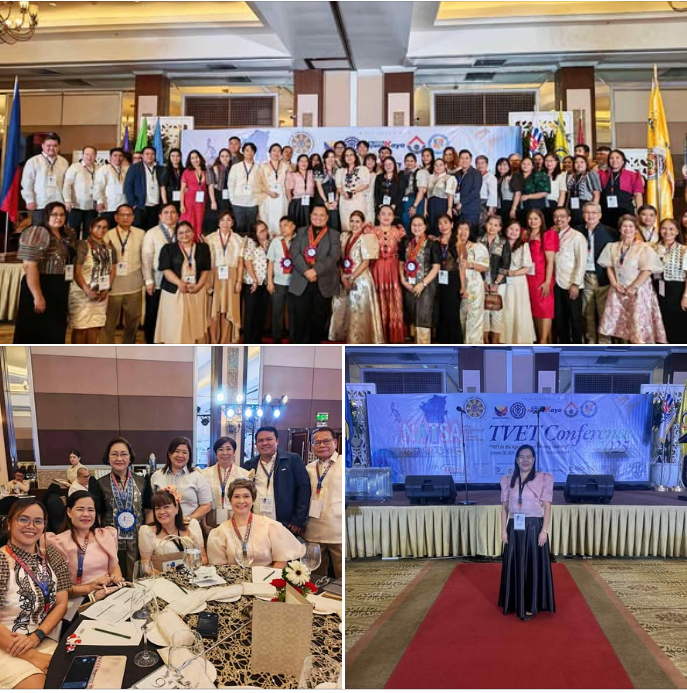
Universidad de Manila strengthens its commitment to technical-vocational innovation, industry collaboration, and workforce readiness in the age of artificial intelligence.
MANILA, Philippines — As artificial intelligence reshapes industries, transforms workplaces, and redefines the skills needed for professional success, educational institutions face an increasingly important responsibility: preparing learners not only for today’s employment opportunities but also for the demands of tomorrow.
Recognizing this challenge, the Universidad de Manila (UDM) participated in the NATSA TVET Conference 2025, held on October 28, 2025, at The Manila Hotel, reinforcing its commitment to educational innovation, technical-vocational education, and lifelong learning.
Representing the university was Dr. Virginia I. Berganio, Assistant Director of the Center for Microcredentialing and Industry Training (CMIT).
With the theme “TVET in the Age of AI and Lifelong Learning,” the conference brought together educators, industry leaders, and officials from the Technical Education and Skills Development Authority (TESDA) to explore emerging developments, technological innovations, and collaborative approaches in technical-vocational education and training.
Preparing Learners for an AI-Driven Future
Artificial intelligence is transforming how organizations operate, how industries develop, and how professionals perform their responsibilities.
These developments underscore the importance of equipping learners with adaptable competencies, technological awareness, and the capacity to continuously acquire new knowledge and skills.
The NATSA TVET Conference provided an opportunity for education and industry stakeholders to discuss how technical-vocational education can respond to these emerging challenges.
Central to the discussions was the importance of integrating technology into skills development while maintaining the relevance of training programs to changing industry requirements.
UDM’s participation reflects its recognition that preparing a future-ready workforce requires educational approaches that are flexible, responsive, and aligned with technological developments.
Strengthening Industry Partnerships and Skills Development
A significant focus of the conference was the role of collaboration in improving the quality and relevance of technical-vocational education.
As industries adopt emerging technologies, stronger connections between educational institutions and industry stakeholders become essential in identifying workforce competencies and developing appropriate training opportunities.
The conference provided a platform for dialogue among educators, industry representatives, and TESDA officials on innovations and partnerships that can support more responsive TVET systems.
For UDM, the engagement offered perspectives that may inform future initiatives in competency-based training, industry collaboration, and professional development.
Through its Center for Microcredentialing and Industry Training, the university continues to recognize the importance of creating learning opportunities that connect education with practical competencies.
Promoting Lifelong Learning in a Changing World
Beyond technological innovation, the conference emphasized lifelong learning as an essential foundation for workforce resilience and professional growth.
In an environment where technologies and employment requirements continue to evolve, individuals must be prepared to update their competencies throughout their careers.
This reality highlights the importance of educational pathways that extend beyond traditional degree programs and support continuous skills development.
Microcredentials, competency-based learning, and industry-responsive training offer potential approaches to addressing these changing educational needs.
UDM’s participation in the conference reinforces its commitment to exploring learning models that support professional adaptability and inclusive educational opportunities.
Advancing Sustainable Development Through Educational Innovation
The initiative supports several United Nations Sustainable Development Goals, particularly SDG 4 (Quality Education), SDG 8 (Decent Work and Economic Growth), SDG 9 (Industry, Innovation and Infrastructure), and SDG 17 (Partnerships for the Goals).
By engaging in discussions on AI-driven education, skills development, and industry collaboration, UDM demonstrates its commitment to contributing to educational approaches that support workforce development and sustainable economic participation.
The conference also highlighted the importance of cooperation among government agencies, educational institutions, and industry stakeholders in responding to technological and employment challenges.
As UDM continues to strengthen its engagement in technical-vocational education and professional development, its participation in NATSA TVET Conference 2025 serves as another step toward advancing innovative, relevant, and future-oriented learning opportunities.
At Universidad de Manila, preparing learners for the future means empowering them with the skills to adapt, the knowledge to innovate, and the confidence to thrive in a world transformed by artificial intelligence.