Beyond the Classroom, Beyond Boundaries: UDM Empowers Communities Through Education and Service
- Categories SDG
- Date October 29, 2025
Universidad de Manila strengthens its commitment to inclusive education, sustainable development, and community empowerment through collaborative extension initiatives.
MANILA, Philippines — Education becomes more meaningful when knowledge extends beyond the four walls of the classroom and creates a positive impact on people’s lives. Embracing this philosophy, the Universidad de Manila (UDM) reinforced its commitment to community empowerment through its Community Extension Engagement initiative, highlighting the transformative power of education, collaboration, and service.
Held on October 29, 2025, with the UDM Lobby identified as the event venue, the initiative brought together UDM students and Lumakas officers in a collaborative undertaking that demonstrated the university’s dedication to making education accessible, relevant, and responsive to community needs.
The initiative featured the collective efforts of the Departments of English, Mathematics, Science, Social Studies, and Physical Education, each contributing its disciplinary expertise to promote experiential learning, environmental awareness, social responsibility, and healthy living.
Bringing Education Closer to Communities
At the heart of the initiative was a shared commitment to transforming academic knowledge into meaningful community experiences.
Through interactive educational sessions and practical learning activities, UDM demonstrated that education is not confined to formal classrooms but can flourish wherever opportunities for learning, discovery, and collaboration are created.
The participating academic departments showcased the importance of interdisciplinary engagement in addressing the educational, environmental, and social dimensions of community development.
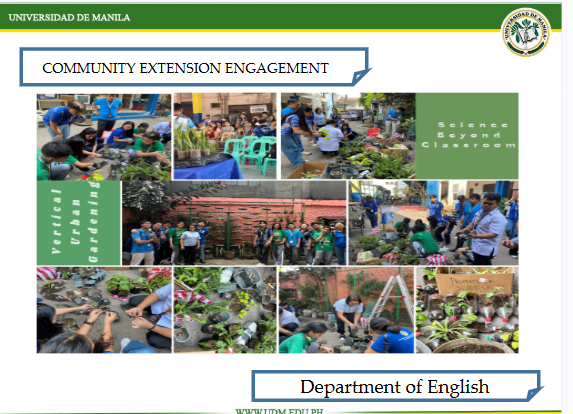
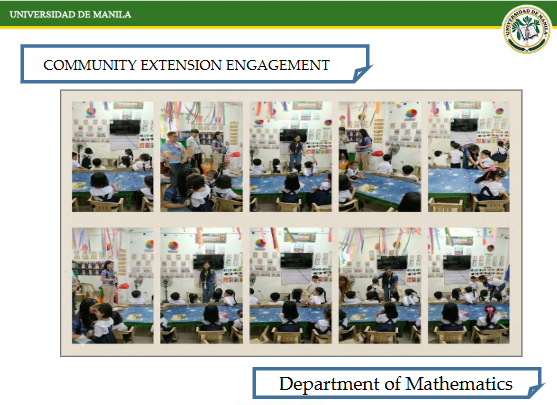
The Departments of English and Mathematics contributed to the initiative’s educational engagement activities, emphasizing the importance of foundational knowledge and interactive learning experiences.
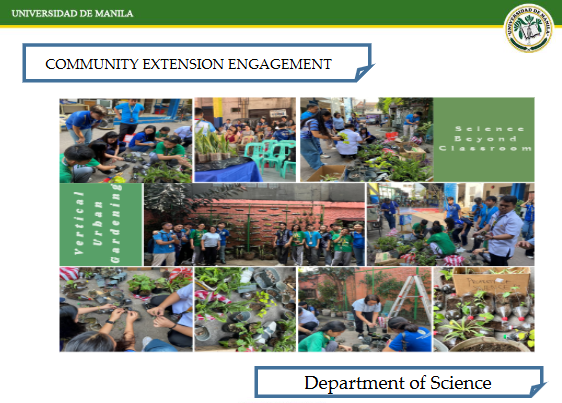
Meanwhile, the Department of Science highlighted environmental responsibility through activities involving urban gardening and environmental awareness. These engagements underscored the importance of sustainable practices and the role of education in nurturing environmentally conscious communities.
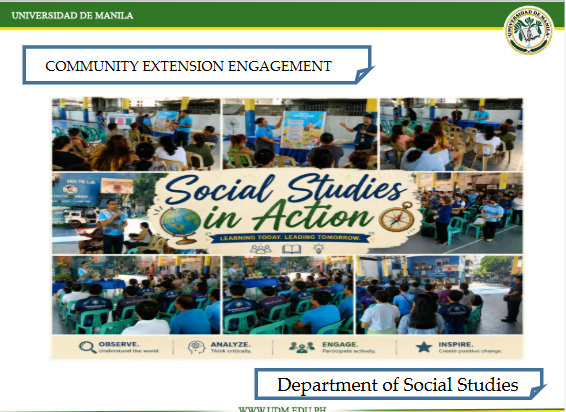
The Department of Social Studies promoted social awareness and community engagement, encouraging participants to appreciate the value of responsible citizenship, shared learning, and collective action.
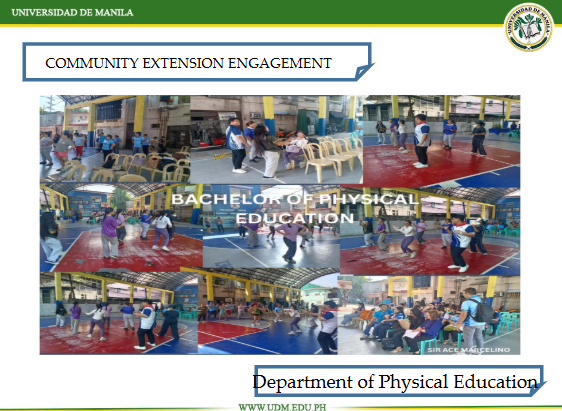
Complementing these initiatives, the Department of Physical Education facilitated physical fitness activities that emphasized active lifestyles, health consciousness, and the importance of physical well-being in community development.
Together, these activities illustrated how different academic disciplines can contribute to a common goal: empowering individuals and communities through knowledge, participation, and service.
Transforming Knowledge into Meaningful Action
Beyond the delivery of educational activities, the community extension initiative served as an opportunity for UDM faculty members and students to connect academic learning with real-world experiences.
By engaging in community-oriented activities, participants were able to demonstrate how education can serve as a powerful instrument for social transformation.
The initiative also reinforced the importance of experiential and service-oriented learning, where academic knowledge is translated into practical applications that respond to community interests and needs.
Through this approach, UDM continues to cultivate a culture of social responsibility, encouraging its academic community to recognize that the value of education is measured not only by academic achievement but also by its contribution to society.
Advancing Sustainable Development Through Community Partnerships
The initiative reflects UDM’s broader commitment to the United Nations Sustainable Development Goals (SDGs), particularly SDG 4 (Quality Education), SDG 3 (Good Health and Well-Being), SDG 11 (Sustainable Cities and Communities), and SDG 17 (Partnerships for the Goals).
By bringing together academic departments, students, and community partners, the university demonstrated how collaborative efforts can create opportunities for inclusive learning and sustainable community engagement.
The educational sessions supported the promotion of lifelong learning, while the environmental activities encouraged sustainable practices and greater awareness of ecological responsibility. Likewise, the physical fitness activities reinforced the importance of health and well-being as essential components of community development.
More importantly, the initiative highlighted the significance of partnerships in extending the benefits of higher education to the wider community.
Building a Culture of Service and Shared Responsibility
UDM’s Community Extension Engagement exemplifies the university’s continuing efforts to strengthen the connection between higher education and society.
Through interdisciplinary collaboration and community-centered activities, the university promotes an educational environment where students and faculty members are encouraged to become active contributors to community development.
The initiative serves as a reminder that universities have an important role not only in producing graduates equipped with knowledge and skills but also in developing socially responsible individuals committed to making a difference.
As UDM continues to advance its community engagement initiatives, it reinforces the principle that meaningful education goes beyond acquiring knowledge—it involves applying that knowledge to improve lives, strengthen communities, and contribute to a more inclusive and sustainable future.
At Universidad de Manila, learning goes beyond the classroom, service goes beyond obligation, and education becomes a bridge toward empowered communities and lasting social transformation.
Source: UDM Community Extension Engagement documentation, October 29, 2025. Prepared from the event report authored by Dr. Virginia I. Berganio.