UDM’s College of Business and Public Management reinforces responsible leadership and community well-being through food handling and hygiene education.
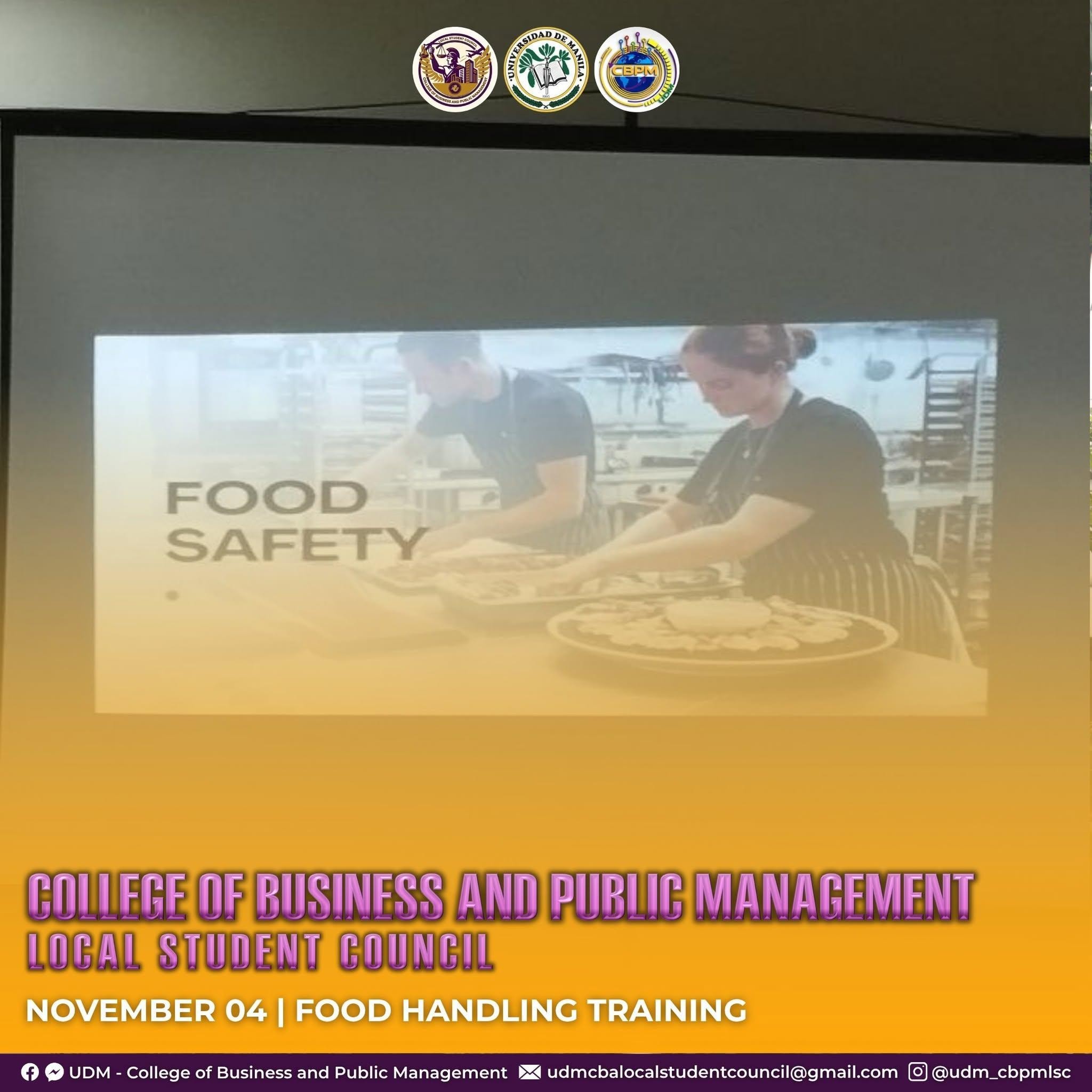
MANILA, Philippines — Compassion becomes more meaningful when it is accompanied by knowledge, responsibility, and a commitment to protecting the well-being of others. Demonstrating this principle, student leaders from the Universidad de Manila (UDM) participated in the Food Handling Training for Community Pantry Organizers and Volunteers on November 4, 2025.
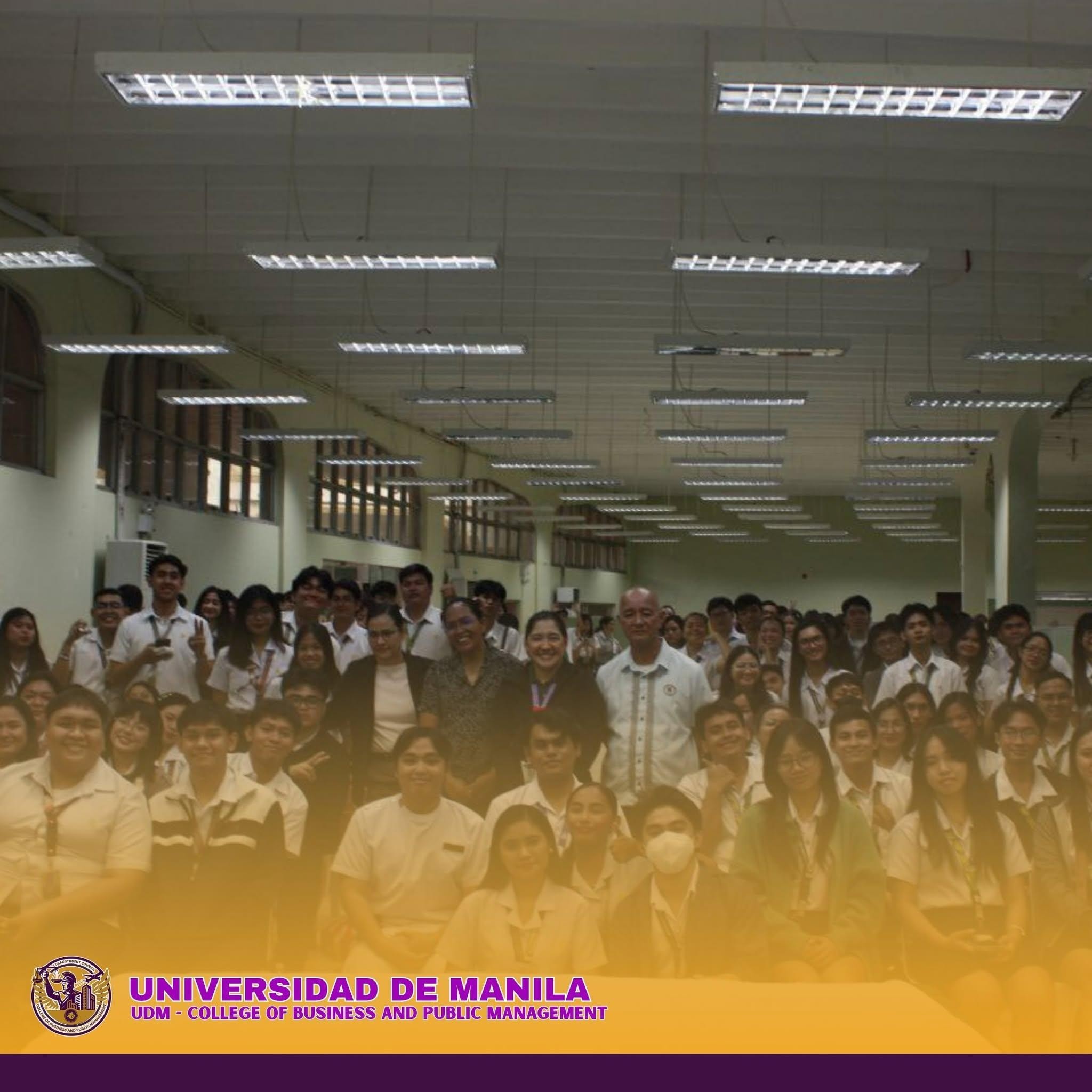
The training brought together student leaders from the College of Business and Public Management (CBPM), including officers of the Supreme Student Government (SSG), Local Student Council (LSC), and departmental student councils (DSC), together with class presidents from different colleges.
The initiative emphasized the importance of proper food handling, sanitation, and hygiene in ensuring that community-oriented food distribution activities are carried out safely and responsibly.
Strengthening Food Safety Awareness Through Education
Food safety is a fundamental component of public health, particularly in community service initiatives involving the preparation, handling, and distribution of food.
Recognizing this responsibility, the training provided participants with essential knowledge and practical guidance on maintaining cleanliness, observing proper hygiene, and promoting safe food handling practices.
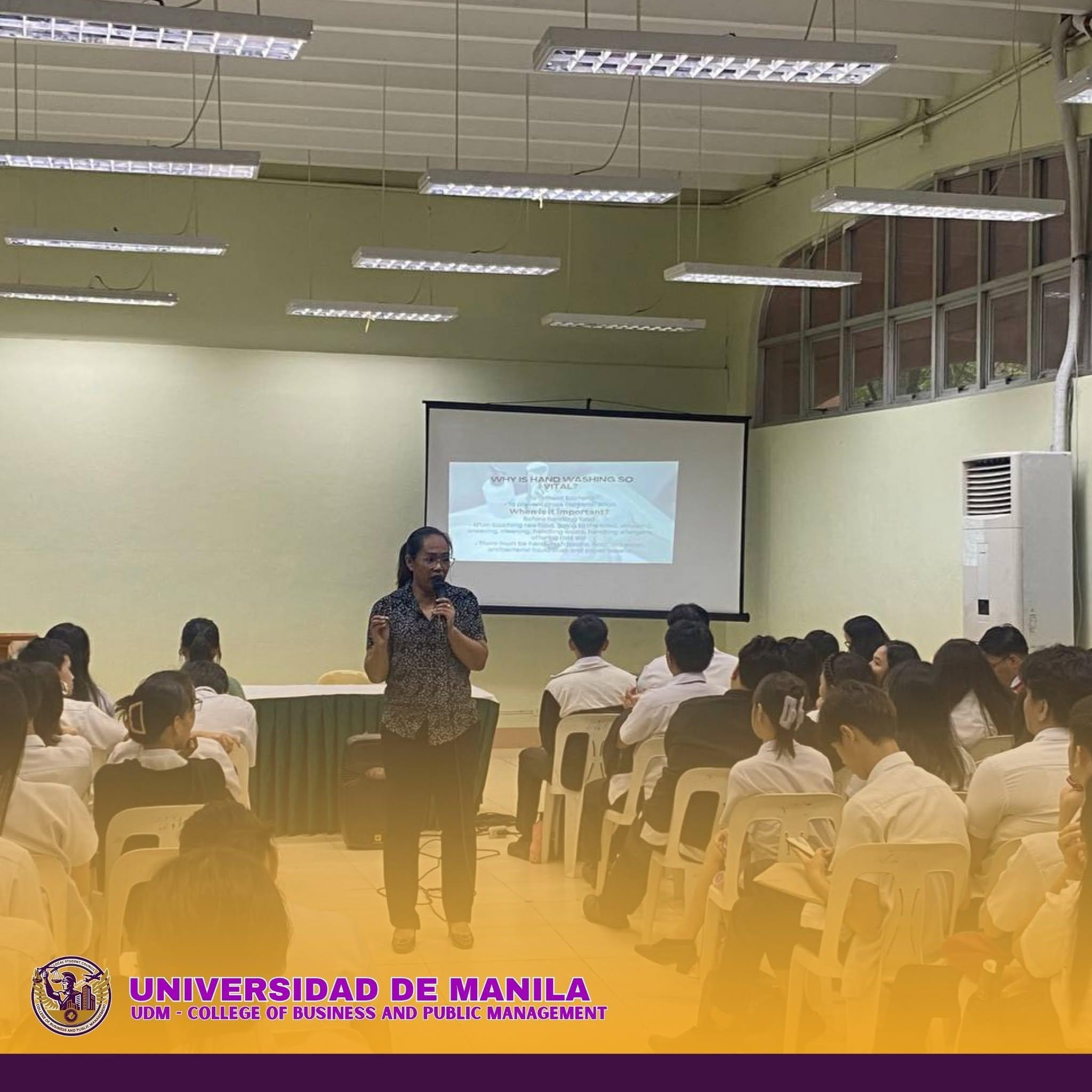
The learning session was facilitated by Prof. Analyn B. Navales, who discussed the importance of food handling and hygiene in protecting the health and safety of individuals and communities.
Through the activity, student leaders gained a greater appreciation of the responsibilities involved in organizing community pantry initiatives and other service-oriented activities.
The training emphasized that the success of community service programs depends not only on the willingness to help but also on the ability to ensure that assistance is delivered safely and responsibly.
Promoting Leadership Rooted in Care and Responsibility
The program formally opened with welcome remarks from Dr. Cecilia G. Carpo, Head of HR Learning and Development, who helped set the direction for the educational engagement.
Following the training session, Dr. Rosalie M. Catu, Head of Student Organization and Activities, delivered the closing remarks.
The participation of student officers and class presidents highlighted the importance of preparing young leaders to manage community service activities with accountability, compassion, and attention to public safety.
For student leaders, the training reinforced the understanding that service requires preparation, discipline, and the application of appropriate knowledge.
By promoting food safety awareness, UDM encourages its student organizations to uphold responsible practices that prioritize the health and welfare of community members.
Transforming Knowledge into Responsible Community Action
The training also demonstrated the importance of experiential and practical education in preparing students for meaningful community engagement.
Community pantry initiatives are often associated with generosity, solidarity, and collective action. However, these activities also require careful attention to food safety standards and responsible distribution practices.
Through this educational engagement, participating student leaders were encouraged to recognize the connection between community service and public health protection.
The initiative further reinforced the university’s commitment to developing students who understand that leadership is not simply about organizing activities but about ensuring that those activities create meaningful and responsible outcomes.
Supporting the Sustainable Development Goals
The Food Handling Training supports several United Nations Sustainable Development Goals, particularly SDG 3 (Good Health and Well-Being), SDG 4 (Quality Education), SDG 2 (Zero Hunger), and SDG 17 (Partnerships for the Goals).
By promoting safe food handling and responsible community pantry practices, the initiative supports public health awareness and the responsible implementation of food assistance activities.
The training also demonstrates how educational institutions can contribute to sustainable development by equipping student leaders with practical competencies that can be applied in community service.
Through initiatives that connect learning with real-world responsibilities, UDM continues to nurture a culture of service-oriented leadership grounded in knowledge, empathy, and accountability.
As the university advances its commitment to meaningful education and community engagement, the Food Handling Training serves as a reminder that protecting human well-being must remain at the center of every act of service.
At Universidad de Manila, genuine service is more than extending a helping hand—it is ensuring that every act of compassion is delivered with knowledge, safety, dignity, and responsibility.